LITELAB — Biotech. Tailored.Request a Sample
← Products
ANTIMICROBIAL PROTEIN RESEARCH

Phage-Derived Endolysins

Targeted antimicrobial protein development.

Exploring bacteriophage-derived lytic enzymes as a foundation for application-specific antimicrobial protein research.

MECHANISM

Act at the bacterial cell wall.

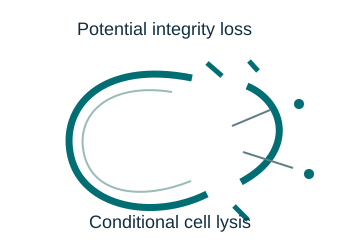
Endolysins are phage-encoded enzymes that hydrolyze bonds in peptidoglycan. For a susceptible organism, sufficient wall degradation can cause loss of integrity and lysis.

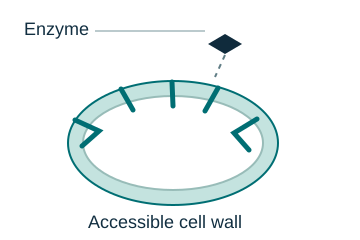
Conceptual endolysin approaching the accessible peptidoglycan of a susceptible bacterial cell.
01

Interaction

Enzyme access and interaction depend on the target cell envelope.

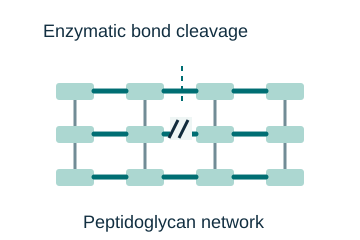
Conceptual cleavage of selected bonds in a peptidoglycan network by a lytic enzyme.
02

Hydrolysis

Catalytic activity cleaves susceptible bonds in the cell wall.

Conceptual loss of bacterial cell-wall integrity after enzymatic cleavage; lysis is conditional.
03

Integrity loss

Lysis may follow under appropriate experimental conditions.

General enzymatic mechanism, not a Lite Lab assay result. A purified endolysin approach is distinct from administering replicating bacteriophages. Activity and specificity vary with enzyme design, organism, and conditions.

APPLICATION PROGRAMS

One research approach. Three application contexts.

Each context requires its own target panel, formulation strategy, and experimental evidence.

01
WOMEN'S HEALTH

Gardnerella vaginalis and bacterial vaginosis research.

Investigate activity against relevant Gardnerella organisms in the context of a polymicrobial vaginal environment. Biofilm activity and compatibility with representative vaginal microbiota are separate evaluation questions.

Target strainsBiofilm modelsMicrobiome compatibility
Key development questions

Which organisms are susceptible? Does activity persist in relevant conditions? How does a candidate affect representative Lactobacillus species and other community members?

Microbiome selectivity, clinical treatment efficacy, and recurrence reduction are outcomes to investigate, not established properties of this program.
02
SKIN & INFECTION CONTROL

Staphylococcus aureus–targeted antimicrobial research.

A collaboration direction for teams exploring topical antimicrobial proteins. Define the relevant S. aureus strains and the intended formulation environment before evaluating enzyme candidates.

Strain panelTopical formulationTolerability assessment
Evaluation scope

Measure in vitro activity with suitable controls and quantitative viability methods, then assess formulation compatibility, stability, and application-specific tolerability.

This direction is proposed for research collaboration. No S. aureus-specific assay result or clinical efficacy claim is presented on this page.

03
ANIMAL HEALTH

Clostridium perfringens and poultry gut health.

Explore an investigational antimicrobial approach relevant to C. perfringens and poultry necrotic enteritis research. Translation requires evidence in the intended delivery format and animal model.

Relevant isolatesGut conditionsAnimal-model evaluation
What remains to establish

Assess enzyme activity under relevant gut conditions, formulation and processing stability, and controlled in vivo outcomes. Prevention of disease, feed-conversion improvement, antibiotic replacement, and authorization for feed use are not established here.

PROJECT-REPORTED OBSERVATIONS

Qualitative assay photographs.

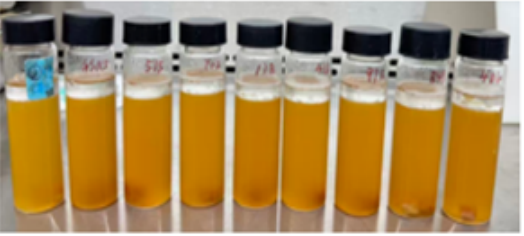
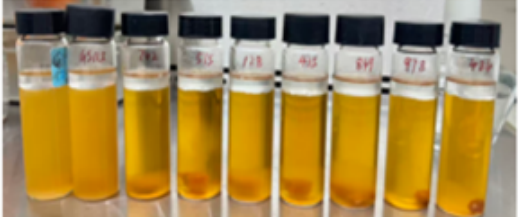
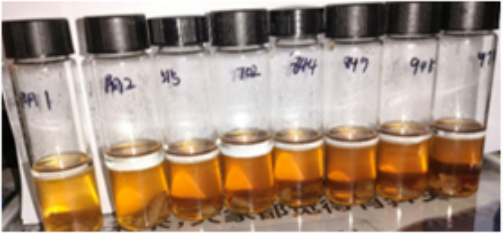
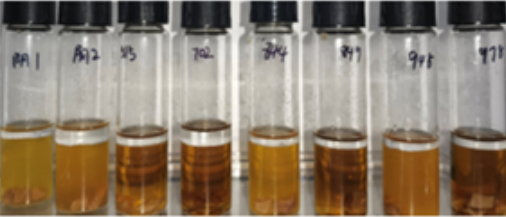
The supplied presentation includes panels labeled inhibition and killing assays at 0 and 24 hours.

Source-labeled inhibition assay

0 hOriginal project photograph of assay tubes labeled as the inhibition assay at zero hours.
24 hOriginal project photograph of assay tubes labeled as the inhibition assay at twenty-four hours.

Source-labeled killing assay

0 hOriginal project photograph of assay tubes labeled as the killing assay at zero hours.
24 hOriginal project photograph of assay tubes labeled as the killing assay at twenty-four hours.
Photographs are preliminary observations.

The slide heading names C. perfringens, but the extract does not establish organism identity for each tube, controls, concentrations, or quantitative viability measurements. These photographs are not assigned to S. aureus and do not establish a kill rate, MIC, clinical efficacy, or safety.

DEVELOPMENT PATH

Define the application before advancing the enzyme.

These are evaluation stages to scope with a partner, not a claim that every program has completed them.

  1. 01
    Select the targetRelevant species, strains, and application conditions
  2. 02
    Identify or engineer candidatesSequence, catalytic function, and target interaction
  3. 03
    Measure in vitro activityDefined controls and quantitative endpoints
  4. 04
    Evaluate stability and formulationConditions appropriate to the intended use
  5. 05
    Validate the applicationRelevant models, safety questions, and development requirements
SCIENTIFIC CONTEXT

Background for the research.

Independent publications provide scientific context. Their results do not establish performance of Lite Lab materials.

  1. 01

    Engineered Phage Endolysin Eliminates Gardnerella Biofilm without Damaging Beneficial Bacteria in Bacterial Vaginosis Ex Vivo. Pathogens (2021).

    Read the publication
  2. 02

    A Thermophilic Phage Endolysin Fusion to a Clostridium perfringens-Specific Cell Wall Binding Domain Creates an Anti-Clostridium Antimicrobial with Improved Thermostability. Viruses (2015).

    Read the publication
NEXT STEP

Discuss an endolysin development project

For biotech, pharmaceutical, women’s health, topical, animal health, and feed technology teams. Share the target organism and intended application.

Discuss Your Project